
by Bonnie Saul Wilks
FALLEN OAK
for those who have fallen
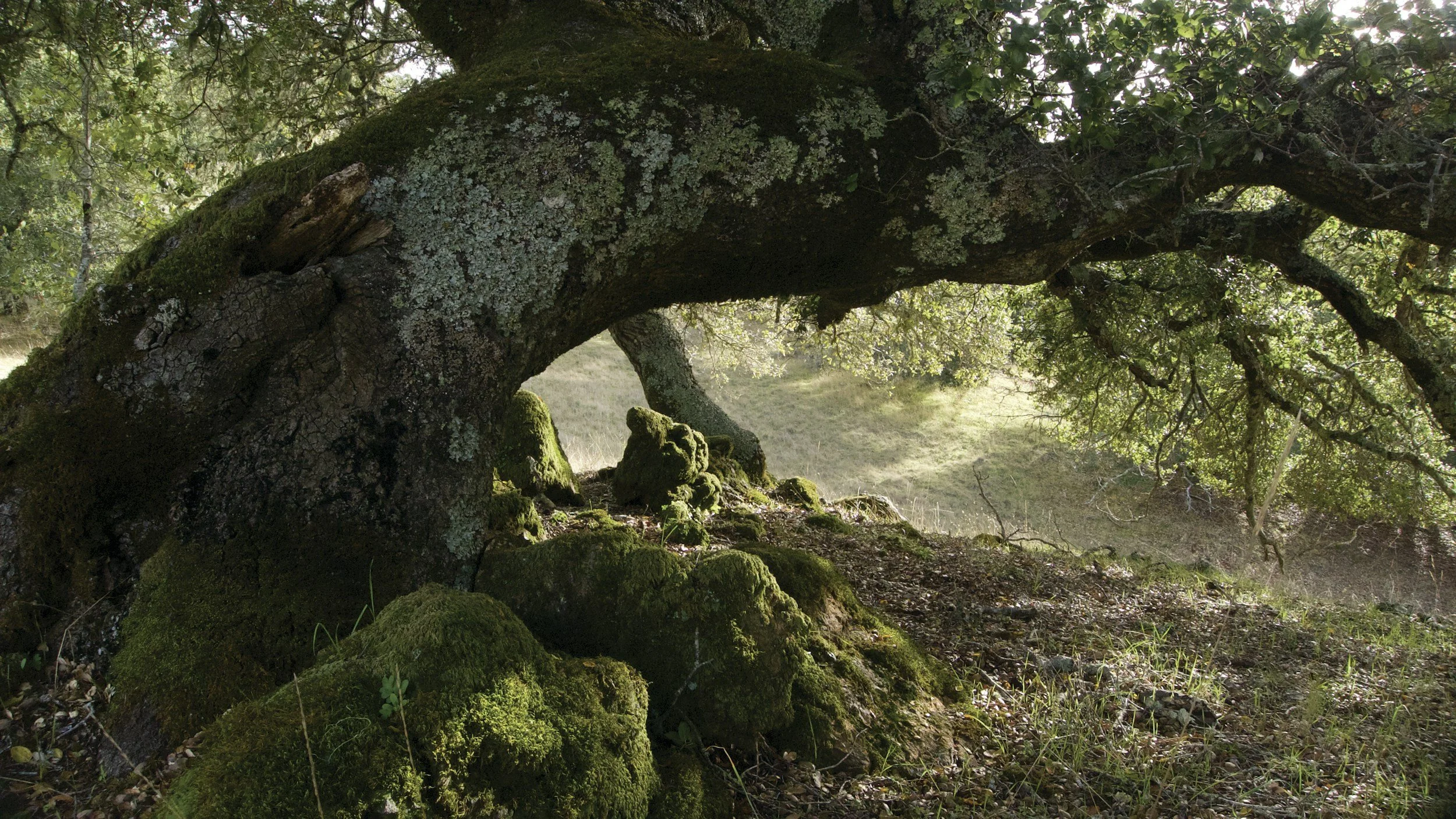
In a thickly grown forest in Georgia, I stumbled upon a
fallen oak that once had risen wildly to stretch toward the
sun and tower in showy strength and beauty above the rest.
Its leafy branches, once full and broad with shade, now
broken and twisted, buried in rocky dirt.
A thousand neighboring trees fell with the crashing weight
of the mighty oak. In a moment, half of the forest collapsed
in stormy descent, driven down to dust.
“Perhaps it was an unseen wind or a sudden storm,”
the people said, shaking heads in disbelief. None
discerned the root problem.
Now when gray clouds gather to pour sheets of rain
upon a thirsty, waiting world of trees, a river runs
through the scar of the fallen oak upon the land.
In dazzling daylight, scores of tender saplings spring up
around the decaying tree, now covered in resurrection
ferns and limelight green moss. Along the dappled wooded
trails, white daisies lift sun-scrubbed faces upward,
tiny eyewitnesses of ethereal glory.
When dark falls in the forest, and heavens turn inky indigo,
a lemon-yellow moon beams through verdant canopies to the
forest floor. On those nights especially, the feral wolf releases
a mournful, wounded howl. A travailing, lone witness to the
rise and
fall and
rise of Beauty.
“The one who thinks he stands must take heed lest he fall.” (1 Corinthians 10:12).
“At least there is hope for a tree: If it is cut down, it will sprout again, and its new shoots will not fail. Its roots may grow old in the ground, and its stump die in the soil, yet at the scent of water it will bud and put forth shoots like a plant” (Job 14:7-9).
HOWLING BEAUTY
“And let the beauty of the Lord our God be upon us,
And establish the work of our hands for us;
Yes, establish the work of our hands.” (Psalm 90:17 NKJV)
I.
Beauty Captivates
creation pulsates,
beauty yearns for God’s presence;
some say, “He is dead.”
It all started with that jagged chain of purple mountain silhouettes against the blue sky. They awakened creation and captivated every sense. I grew up in Colorado, fifteen minutes from the Rockies. Not a day passed without my gazing westward toward my highland compass—to find my beauty bearings, center my soul, and find joy in my roots.
Imagine me, a six-year-old seeker of beauty, descending into devastation as my family drove Interstate 70 to Genesee Mountain for a picnic. I kept asking my Grandma Eva why the mountains looked like rocks, dirt, and trees—not like hazy purple shapes set against the blue, as they appeared from my bedroom window.
Even now, I stay a little shattered by that discovery.
Throughout my grade school years, glorious summer nights stirred my soul toward something beyond beauty. I mused alone on a weathered wooden chair on our front porch, communing with the stars. Above me hung a midnight-blue velvet sky, studded with millions of tiny diamonds. First, I spotted the Little Dipper, then the Big Dipper. I had only heard of Orion and the Pleiades—I knew they would be my friends when we finally met.
It was the 1960s. TIME magazine had revived Nietzsche’s declaration that God is dead, and a cultural movement had begun. But I looked up at that awesome night sky—something so far beyond me that I trembled to breathe. Smitten by the splendor, the little girl from the Rocky Mountains lifted her arms to worship my unseen Creator. I rejected the lie that God was dead—and would not remain silent. That decision became a joy in resistance and in existence. I knew nothing then about the falsehoods others would later speak about God, but I was prepared, captivated by beauty.
II.
Beauty as Sacrifice
star, shell, stalk, and seed,
ever proclaiming Lamb’s blood,
hidden in plain sight
Not only did I find creation’s beauty where I grew up, but I also found it within our church community. As a vibrant, mission-minded congregation, we often heard missionaries share stories about their sacrifices in bringing the Gospel to other nations.
At age 14, I heard Elisabeth Elliot, an American Christian missionary and author, speak about the martyrdom of her husband and four other missionaries in South America. Five couples tried to reach a headhunting tribe in Ecuador, the Auca Indians. Sadly, the five men—husbands and fathers—were speared to death. Elisabeth’s story is one of radical forgiveness and self-emptying love. She and her daughter returned to share the Good News, and eventually many from the tribe came to know salvation. Elisabeth’s daughter was baptized in the river where her father had been martyred.
I did not cry over Elisabeth’s message—I wept like sheets of rain. My legs shook. Suddenly enlightened, I gazed at another kind of beauty—the splendor of sacrifice. These women became like Christ in word and deed; they gave their lives unto death. This Scripture ignited my heart: “Therefore, I urge you, brothers, in view of God’s mercy, to offer your bodies as a living sacrifice, holy and pleasing to God—this is your true and proper worship” (Romans 12:1).
My mother bought the book “Through Gates of Splendor” by Elliot, which tells the beautiful story of sacrifice in full. After finishing it, as a tender teenager, I lay across my bed and wept again, asking God to lead me into a life of such self-emptying love.
III.
Beauty in the Nations
lifted from ashes,
transformed darkness into Light,
princes of nations
Before I married, I graduated from nursing school and Bible school. Both prepared me for the mission field. In my second year of Bible school, my Hebrew class had the opportunity to go to Israel and serve as volunteers on a kibbutz. I said yes and loved it so much that I stayed for three years. Besides learning Hebrew, I grew to love the people of the Middle East—so varied and multicultural. I shared the Gospel often by practicing hospitality through listening, praying, and coming alongside people as a friend and witness.
My husband and I have been married for forty-three years and have lived abroad as missionaries for nine years. We pioneered and led a nonprofit organization with Bible schools. Our travels exposed us to humanity's beauty and sorrow in visceral ways. We saw extreme poverty and injustice, and we also witnessed resilience, generosity, reconciliation, and transformed lives. My heart, longing for beauty, sometimes burst with joy and melancholy at once. Those two opposites—glory and grief—initiated a journey of discovery and documentation.
IV.
Beauty and Words
beauty and sorrow,
braided as colored ribbons,
unfolding stories
I have had many callings in life: wife, mother, nurse, pastor’s wife, missionary, and poet. The wonder of holding these diverse missions together has been the beauty of words—the calling to see and speak of the splendor and suffering around me. Writing poetry became a safe haven where I could process what I had witnessed and take responsibility for creating an unvarnished yet glorious record. I do not write to escape the world or even because I have something to say.
I write because I have seen too much to remain silent.
Then a singular thought came.
“I don’t write—I howl.”
I must laugh at myself—for five glorious, arrogant seconds, I thought I had invented it. The phrase is ironically associated with Allen Ginsberg (whose worldview is the opposite of mine!) and his famous poem Howl. Though the exact phrase does not appear in the poem, it became a summation of Ginsberg’s poetic declaration. He used his voice to protest a disenchanted, profane society.
Still, I identify with the idea of howling—but from a profoundly different calling.
My howl is travail.
Biblical stories of frail and fallible humans have sown seeds of faith in my heart since childhood. Jeremiah wept in deep travail over Jerusalem. Joel called the priests to wail before the Lord. David cried out and fasted for miracles in the Psalms. John the Baptist, the lone voice crying in the wilderness, announced the Messiah.
The most heartbreaking and intimate for me is Jesus, who wept over Jerusalem and cried out in anguish from the cross.
Romans 8:22-23 is a passage that I return to often, a trusted guide to awaken travail. All creation travails in expectation and pain, awaiting redemption:
“We know that the whole creation has been groaning as in the pains of childbirth right up to the present time. Not only so, but we ourselves, who have first fruits of the Spirit, from inwardly as we wait eagerly for our adoption to sonship, the redemption of our bodies. For in this hope, we are saved.”
I do not howl in despair but in hope, as the earth groans with relentless faith. Christ is reconciling all things in heaven and on earth to Himself:
“For God was pleased to have all his fullness dwell in him, and through Him to reconcile to Himself all things, whether things on earth or things in heaven, by making peace through His blood on the cross” (Colossians 1:20).
This sounds primal, yet the splendor of a magnificent universe has pierced my heart. Beauty has awakened and wounded me with a longing for more—a deep yearning for intimacy with the Creator through our Redeemer. This incomplete state has led me to the cross and the resurrection.
This is why creation’s beauty is piercing. Dare I say creation is cruciform? Christ, the Lamb of God, stood with the Father at creation’s beginning, and the mystery of the cross was already present in the heart of God. Jesus was wounded from the earth’s foundations. The beauty of creation wounds us, too, because it awakens the glory for which we were made: union with Christ, the Lamb.
V.
Rooted in Beauty
the bones of my heart
barren, naked, undone,
rigidly rooted.
I have spent years traveling among nations, uprooted and sometimes painfully displaced, out of place. Yet Beauty found me everywhere—in forests, meadows, and mountains, under the stars, in foreign lands, in human faces, in worship, in the hope of suffering children, and in radiantly transformed lives.
Beauty rooted me—even when I lived an uprooted life.
And yet, Beauty is not yet fully visible.
My poetry howls in travail until the blood-soaked ground is vindicated, until the slaughter at the gate is requited, until mourners are comforted, and until His form is clearly seen.
The little girl on the porch, gazing at the Colorado night sky, learned something that has never left her. When the world says God is dead, beauty rejects that lie. When suffering becomes unbearable, beauty offers an escape.
Creation groans, and travailing beauty reminds me this isn’t the end of the story. Rooted in beauty, I don’t write—I howl.
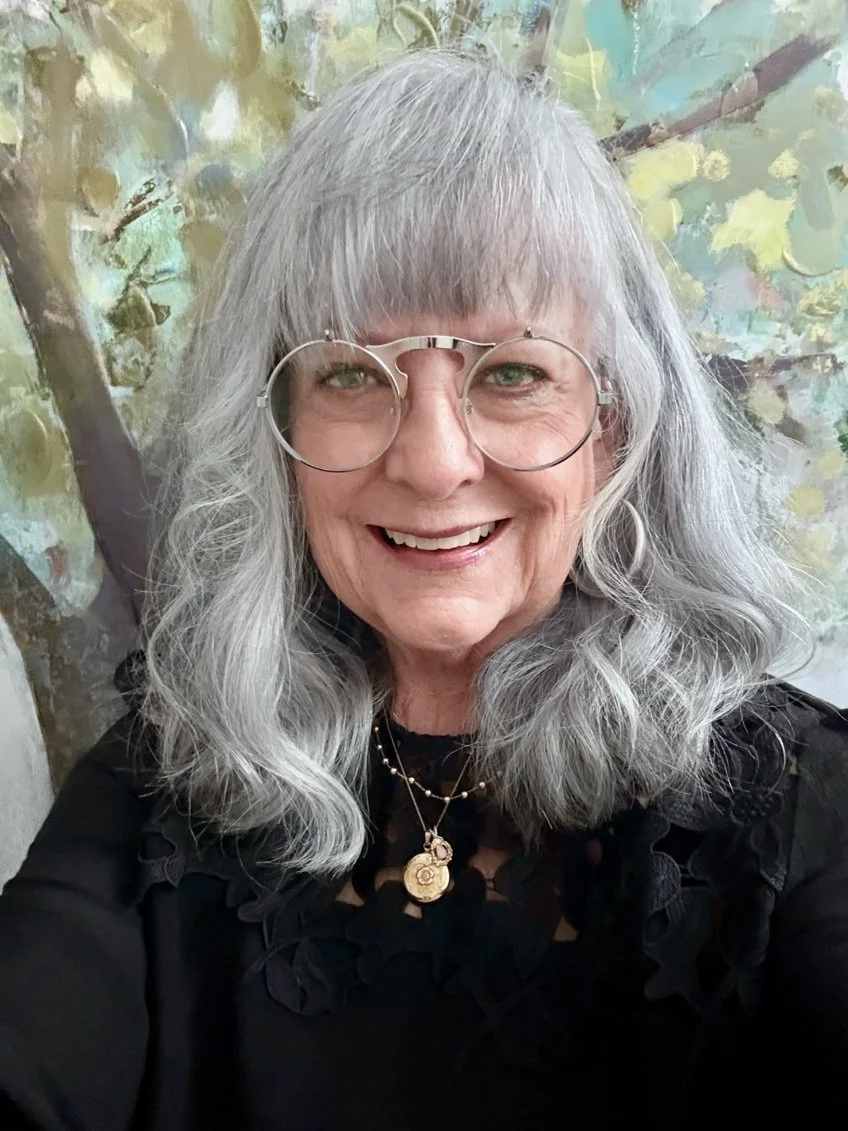
BONNIE SAUL WILKS
Bonnie Saul Wilks has had many opportunities to serve—as a nurse, missionary, pastor’s wife, and, most importantly, grandmother! As a writer and poet, Bonnie is passionate about finding beauty in both splendor and sorrow. She has written two books, Sabbath a Gift of Time and A Roadmap to Joy. Traveling has been a plus, and Bonnie does her best writing in liminal places found in the Rocky Mountains, the highlands of Scotland, or the Sinai Desert. Her poetry and prose have appeared in literary journals ISSUES, Jewish Voice Today, Everyday Epiklesis, Studio G, and others.