
by Tessa Mullet
IN PURSUIT OF ROOTEDNESS
The first time it happened, I was seated at a small yellow creperie on Main Street. It was a routine Saturday morning in the small town we’d moved to five months prior.
As our waitress walked away, I wondered if my eyes revealed the bewilderment I felt as the word came out of her mouth. She returned promptly with my mug, now full of piping-hot local drip.
She knew my name. I knew her name. I was a “regular.”
Earlier that year, my husband and I purchased a rural home in this small South Carolinian town in which every commute boasts a backdrop of mountain foothills. Not long ago, my two young boys and I padded the sidewalk of a master-planned community within a large Florida city. Not once did I feel at home during the year spent in that perfectly flat, meticulously landscaped neighborhood. Yet somehow, after only a few short months in our new Appalachian backdrop, I felt more at home than ever before.
How quickly something can feel like home when it’s the right fit.
Except, it’s not so simple. This idea of home, of where to put down roots, is actually quite complex.
I know something of uprootedness. My eight-year marriage boasts six moves across five states for four separate ministry assignments. The act of pulling up roots to immediately put them down again six times over does something to one’s soul that only the term uprooted can begin to describe.
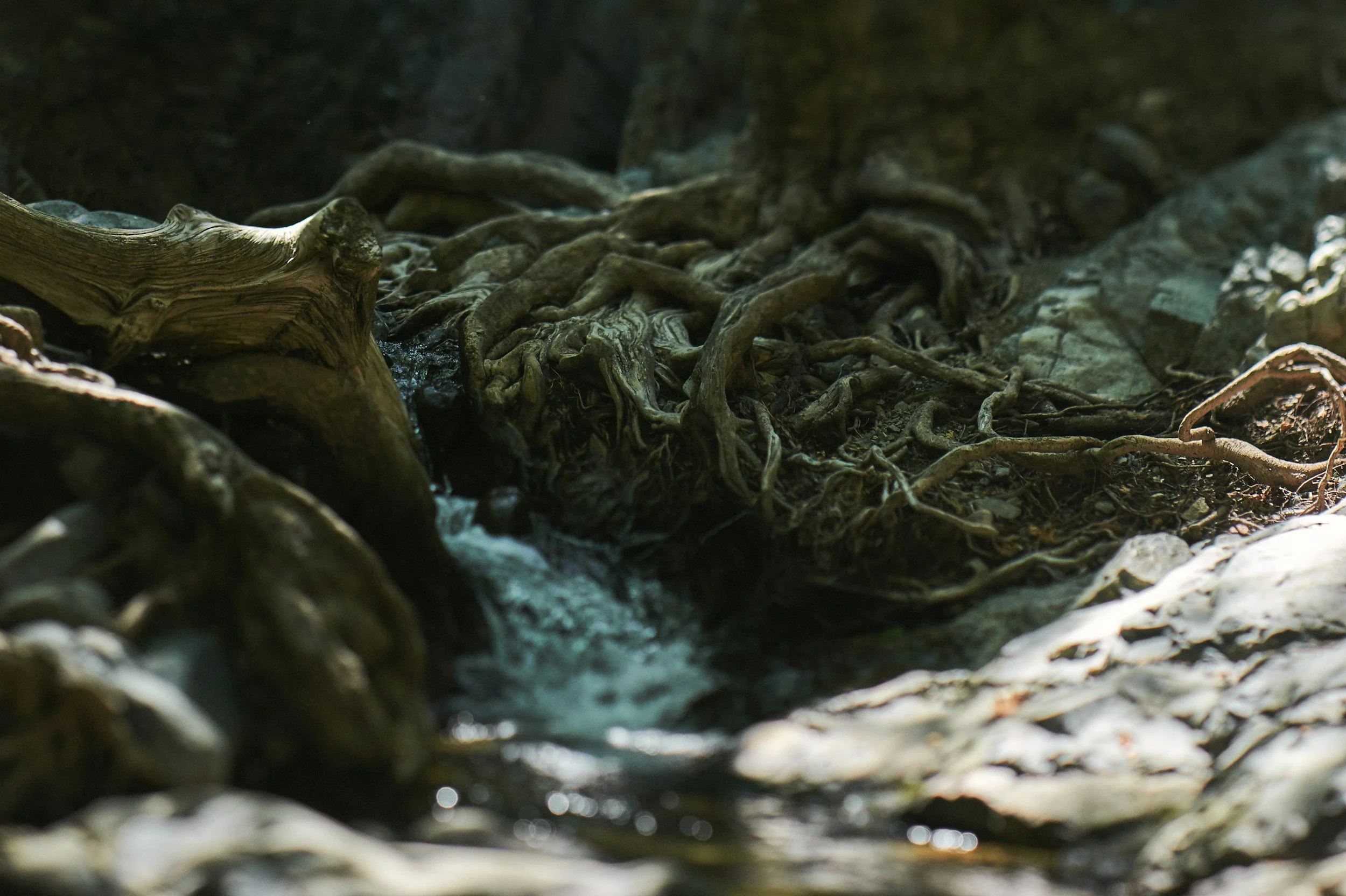
Roots exposed, dangling vulnerably above the earth. Crumbles of old dirt falling away. Some roots separating entirely, left behind to die off. That which, by design, is not meant to move, is grasped and carried to another place.
That which seeks to settle cannot.
I have followed Christ through all of these moves, and I thought that doing something in the name of ministry would lead to the right thing—or, at minimum, a good thing. But what I didn’t realize until somewhere after the fifth move is that in asking us to die to ourselves, Christ doesn’t ask us to give up ourselves. Instead, I’ve discovered that pursuing Christ leads to the discovery of our truest self—a soul unencumbered by false narratives and unrealistic expectations.
In Florida, I was surrounded by other ministry families, yet I felt a perpetual untethered-ness that I couldn’t shake. It took an exercise in discerning my core values to realize where I had gone wrong. The practice of naming that which is meaningful to me and journaling through a vision for my family’s future as we aimed to live out those values made it painstakingly clear that Florida would not be fertile ground for such a life to take root. The climate and culture, the pace and priorities—I simply didn’t feel at home where I lived.
Being a “regular” didn’t feel possible in those spaces.
If values are seeds in the soil of life, the conditions in which I found myself were no place to plant them. The lack of fruit in my life served as evidence.
More than stating preferences, naming values identifies what our soul truly longs for. Sometimes it takes collecting that which feels surface-level to begin uncovering what resides underneath. Maybe it’s the mountains or the city. Maybe it’s taking more risk or pursuing more margin. Perhaps it’s specific names and faces, or ones that you don’t know, but hope to.
Naming such things led us to more questions, like: who do we want at our table five years from now? Where do we best connect with God? Discovering the answers helped us respond to God’s invitation to show up for our own lives. They helped us be present to ourselves and our truest desires—the ones God planted within us.
For years now, as I’ve considered my own spirituality, it has led me to the trees. Scripture tells us in Psalm 1:3 that, like a tree planted by streams of water, we bear good fruit when our life source is the Lord. I’ve often wondered why God didn’t specify a certain tree in this psalm, but the ambiguity speaks volumes.
When I consider how wide varieties of trees there are, with their incredibly diverse range of fruit-bearing and leaf-bearing, I can’t help but also consider the scale of the diverse needs of these trees. While all trees need water to survive, each tree also has unique conditions in which it thrives.
In my journey to Florida and back again, I found guilt disguised as faithfulness. How could we leave a place after only ten months of being there, for a ministry assignment, nonetheless? Were we unfaithful? Had we completely missed God’s voice in our discernment? Shame was the incessant beat to that season, but in the end, our values sang louder. As we allowed our desires to become the very material of our prayer life, we found them calling us elsewhere to find roots once more.
In that long season of uprootedness, I considered the trees again. Rootedness may be a state, but it is also a process. Once a seed finds soil to root in, it sends roots further and further down, sinking deeper with time and age. A healthy, thriving tree bears fruit in its season. Winter inevitably comes, but the roots endure to bear fruit once more.
As I considered the nature in which God made me and allowed my rootedness to be found in Christ, I felt increasingly unable to settle into a space not meant for me.
As I became a regular at the feet of Jesus, who knows me intimately more than I’ll ever know myself, I discovered places that needed pruning, rhythms that needed tending, and decisions that needed to be made.
As I looked into the face of Jesus over and over again, I began to see my unique image through God’s eyes.
I often imagine a world in which we, Jesus followers, not only learn to die to our sin nature, but we also learn to thrive in the fullness of who God made us to be. A world not of well-manicured trees but one brimming with lush, flowering trees giving glory to God in the fullness of their beauty. I have come to believe that fruitful rootedness comes when the desires of our life align with God’s desires for us. When our innermost self finds its true self in Christ.
Just as a tree that bears fruit gives glory to the Creator, I believe our God-given desires ultimately bear fruit to his glory. A life pursuing rootedness in who God made us to be is not self-seeking. It is a life in pursuit of reflecting Christ’s beauty to the world—one imago Dei reflecting the Creator, inspiring another imago Dei to do the same.
And if ever I begin to doubt, I simply consider the trees.

TESSA MULLET
Tessa Mullet resides in Upstate South Carolina with her husband and children. She holds a master’s degree in Christian Spiritual Formation from Friends University. As a woman with many dreams and desires—from intentional motherhood to building a career, to hobby farming and spiritual direction—she is deeply curious about finding Christ’s invitations in all of life. Tessa takes to writing to hold these seemingly disparate invitations together and to invite others to do the same.
You can read more of her writing at tessamullet.substack.com and connect with her on Instagram.