
by Kristine Amundrud

PLANT ME LIKE A TōTORA TREE
I once confused the safety of a settled life with abiding in the Lord. Entrenched in good rhythms and reliable rhymes, I lacked the thirst required to grow into a deeper knowing and trust. Below the surface hid scared, insecure roots. I believed I was anchored in the safety of His love, for there had been no tests to prove otherwise.
The writer of Ecclesiastes says that there is a time to plant, and a time to pluck up what is planted (3:2 ESV). So, after thirteen years spent living on acreage family land, God prompted us to pivot from the normal trajectory, and in turn, uprooted our very comfortable and satisfactory life.
Out of obedience, I began to say goodbye to every flower, tree, and chickadee. I soaked in every glorious sunset with a silhouette of the Rocky Mountains. I cried cathartic tears as I grieved a beautiful chapter and all the things I still couldn’t make right. Not knowing the future, I held tightly to loved ones with each parting hug. As I put a series of unresolved things in a proverbial box for safekeeping, I imagined the box would follow me, as boxes often do.
Wrapped in burlap, secured safely in twine,
trading prairie fields for an ocean,
I dug a lonely trench and regretfully,
I called it mine.
I never imagined the pain I would experience in leaving home. Not everyone blessed our departure, but believing our move was ordained by God fueled my courage for future days. Cut deep by the cross and all my longings for old Egypt, a tangled mass of circling roots was sheared off in order to stimulate new growth.
I kept reminding myself that “hard” doesn’t mean “bad.” Life can change in an instant, but we are still left to do the slow, agonizing, and lonely work. I angrily cried out: God, you brought me here, across the world, only to bring me to my knees? Breakthrough was not the passionate, photo-worthy moment I had longed for; rather, it was a slow stretching out of my prison.
“I will plant you like a tōtora tree.”
One Sunday, my husband excitedly shared these words that God had spoken to him during service. Anxiety wrapped around my ribs and airways as I daily put more pressure on myself to fall in love with my new surroundings. Exotic birds spoke to me in tongues, and otherworldly flowers erupted in praise songs. Everyone called it paradise, and I couldn’t escape the shame of wilting so early on. Dark seasons show no regard for timing or nature’s aesthetic. In public, I continued to smile widely, though I would have given anything to simply hide.
Buried beneath a thick blanket of silt, I fell into a deep pit of shame.
My husband’s mention of the tōtora tree intrigued me, and I began researching its significance to New Zealand. In Māori culture, the tree represents strength, leadership, and longevity. It’s striking to note that the tōtora tree can produce new root systems after flooding, with regenerative roots developing from the trunk where silt has been deposited.
“If God can rescue the totora tree from flood devastation, how much more will he rescue me?” I thought. After the adrenaline, I fell into a valley—one of the deepest I have known. Time stopped, and I hovered in a frighteningly unsettled place. Sitting in the doctor’s office, I nervously asked him if I was okay. With compassion, he answered, “What you have done is massive. Some will feel the shock of transplant more deeply than others.”
//
Back home, the autumn air is welcoming, and familiar soil invites me in. Many have asked why we returned to Alberta. The answer is as nuanced as love coming back to life. I remind myself that we are still moving forward. It is brave to leave a home and equally brave to pivot back. In the end, God didn’t plant us long-term where we expected, but the message remains true: he is planting us like a tōtora tree, even here next to Spruce and Aspen, where the temperature drops below zero, and all the roads are wonderfully straight.
God has grown me like the tōtora tree, strong and mighty to resist the enemy’s lies. Covenantal love stretches like lateral roots beyond the crown, and I receive it without guilt or shame! My heartwood is content, and still soft enough to be shaped. Praise God for meeting me in the estuaries and lowlands, for not despising my pain. Branches reborn reach heavenward in praise, anchored by a mighty God. Protected in secret by layers of love, free and unconditional, my needles bear fruit for the bellbird.
Don’t all good things grow in quietness and trust?
THE PōHUTUKAWA
I have lived out of a body, hovering
on an island where Pōhutukawa
trees grip shorelines for dear life.
It seems they have given up—
their scraggly beards lengthening
low in surrender, burrowing
deep into the crevice of trust.
Please, don’t speak of your paradise.
The spruce trees glitter with autumn’s first letdown.
Perhaps fallow land can finally lend itself to forgiveness.
Can’t we clap our hands for the cured prairie wool?
A spectacle of crimson plumes, but I am unmoved.
Pōhutukawa flowers pray on street corners.
In secret, I cling to the notion of control.
“You think I don’t know real beauty or goodness
in the land of the living?” I ask, and they respond:
“Be here, anchored and whole.
Stretch deep into mystery,
just beyond the
bridegroom’s
canopy.”
EVEN THE SONGBIRD
Pink and featherless,
but about to turn warm olive,
stay hidden in lichen and wool
until painlessly, overnight
they chirp recurrent praise
from below a deserted window,
where bravely, they seem to ask:
“What will you do with your
twigs and dead leaves?”
For you had hoped for a sanctuary,
hidden in foliage and shadow of Him,
in the fork of a Rhododendron tree—
a nest lined with enough peace for today,
cemented by love, good intentions, and decay.
The fledglings stretch and grow past
clumsy, with no complaint over living,
only a hunger to reach beyond the edge
and leap forward into the unknown.
Take heart, breakthrough did not come
quickly, even with the pastoral landscape,
even with rich, phosphorus dirt.
I consider new ground, and what it takes
to break from the old shell of hurt.
Weaving truth into my roost, I pray
for refuge under the wings of unconditional
love—secure but free.
He far more than simply tolerates me.
Held in eternity,
I am cupped
in my Father’s hands.
KRISTINE AMUNDRUD
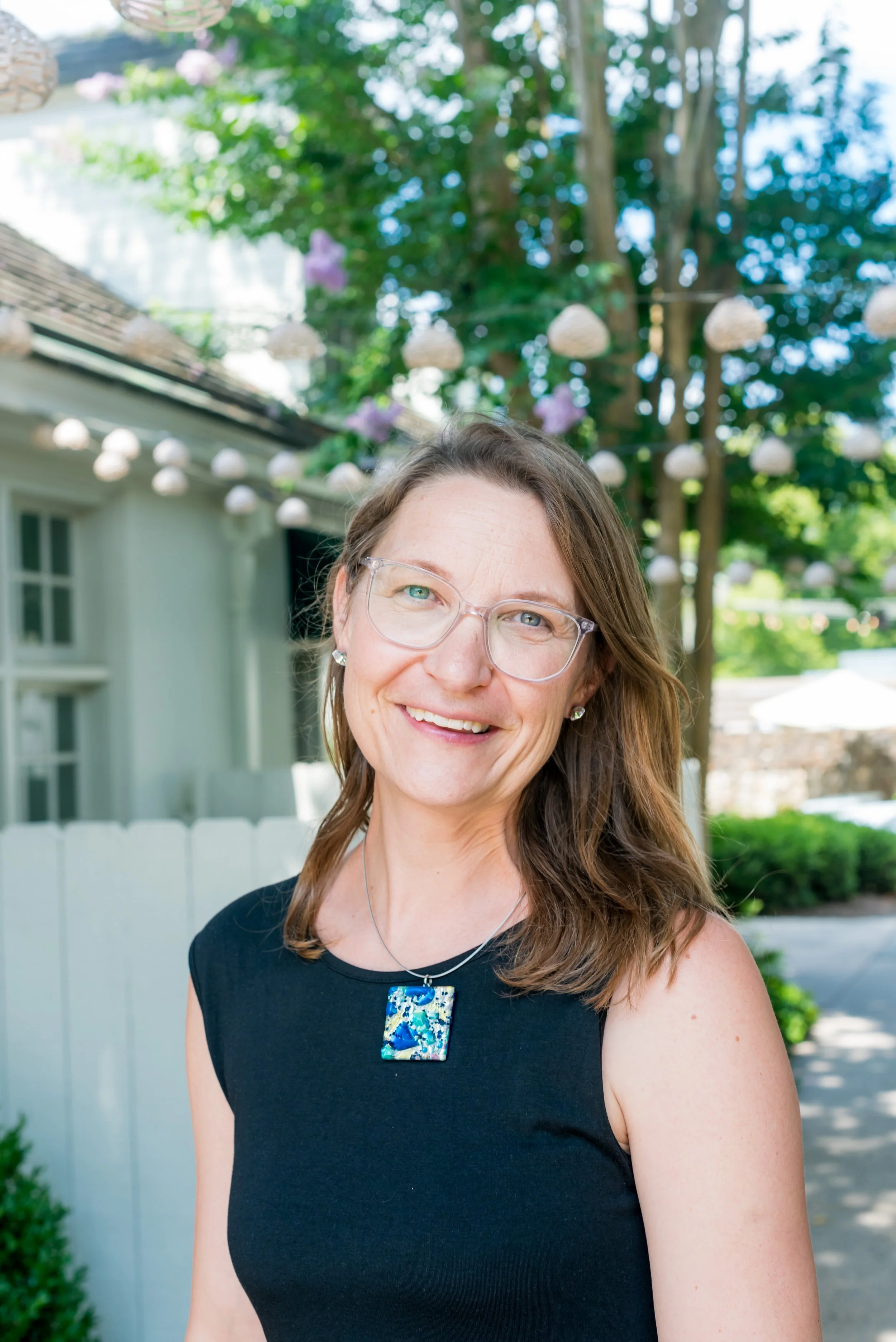
Kristine Amundrud is a poet of faith, passionate about pursuing healing through story-work and writing. She hopes you will find traces of God’s redemptive power in her words.
Kristine lives in Central Alberta but left a piece of her heart in Northland, New Zealand. She loves dreaming alongside her husband, Joseph, and their three treasures, Britta, Elsa, and Soren.
She is honored to have work featured in The Way Back to Ourselves, Calla Press, Humana Obscura, Imprint Magazine, Solid Food Press, and The Truly Co.
Connect with her: